
If you see roaches in your kitchen in January, they did not come in from your yard. They could not have.
They cannot live outside here
German cockroaches do not live outdoors. They live with people, inside buildings, and people carry them from place to place.
The cold is a large part of why. Young German cockroaches die when the temperature drops into the fifties. By November most nights around Cincinnati are well below that, and the first freeze normally arrives in the last week of October. There is no population waiting outside for a way in.
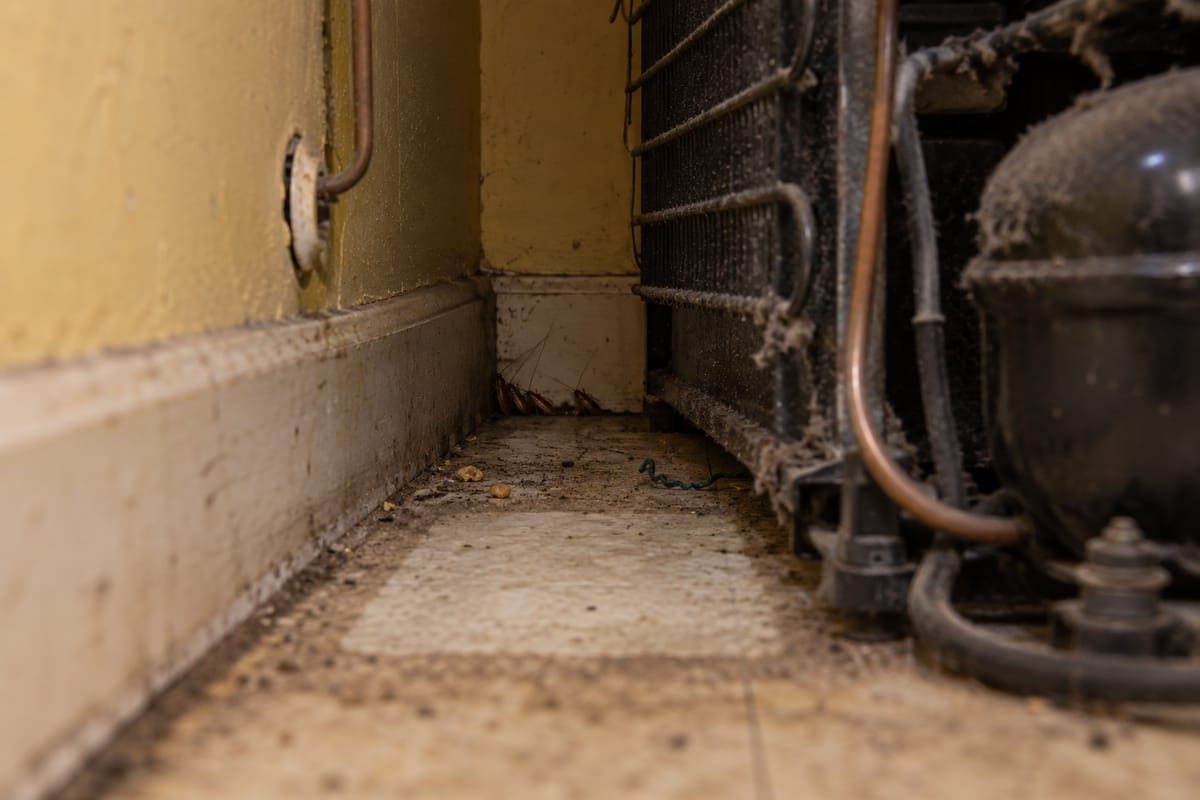
Your kitchen is another matter. It sits around 70°F all winter, and behind the refrigerator, near the motor, it is warmer still. To a German cockroach, a Cincinnati kitchen in February is excellent habitat regardless of what the weather is doing outside.
So how did they get in? They were carried. A grocery bag, a drink carton, a second-hand appliance, a suitcase. In a shared building they may have come through the wall from next door. Once they were inside, the weather stopped being relevant.
First, make sure it is a German cockroach
Before you spend any money, find out what you are dealing with — because the most common look-alike around here needs no treatment at all.
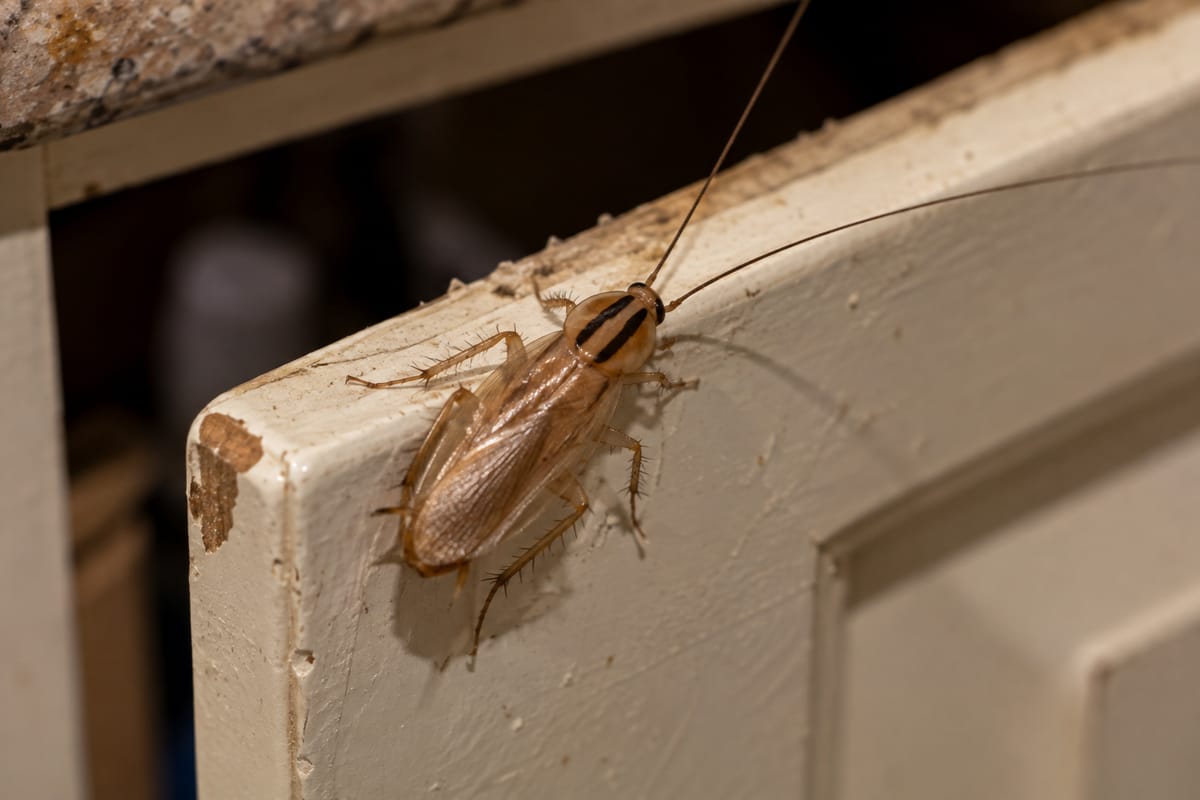
German cockroach. About half an inch long and light brown. The giveaway is two dark stripes running back from behind the head. The young are smaller and darker, and in a real infestation most of the population is young, so the adults you see are a fraction of what is there.
Wood roach. Darker brown, with a pale edge around the shield behind the head and along the wings. Males can be an inch or more. Wood roaches live outdoors across Ohio in leaf litter and rotting wood, and they wander in by accident, often drawn to a porch light in summer.
That distinction matters here, because a lot of our neighbourhoods sit against woodland — the wooded edges around Indian Hill, the trees along the Little Miami through Milford and Loveland. If you live near woods and something large strolls into the living room in July, it is most likely a wood roach.
Watch the behaviour. Wood roaches do not hide much. They are out in daylight and often will not run when you approach. A slow roach crossing the floor in the afternoon, in a house near trees, is almost always a wood roach — it will die within a few days because your house is too dry for it, and it cannot breed indoors. Regular prevention around the foundation keeps them out.
A roach that bolts for a crack the instant the kitchen light goes on is an entirely different problem.
How fast they spread
German cockroaches breed faster than any other roach you are likely to meet. A female carries an egg case holding 30 to 40 eggs and produces several in her life, and the young can be breeding themselves within a few months. One female can become thousands of roaches inside a year.
Where you live changes how that plays out.
Shared walls. Milford has the lowest share of detached housing anywhere we cover, with a substantial number of units in multi-family buildings, and there is attached and adjoining stock elsewhere in the area too. German cockroaches move between units through wall voids and along pipe runs, so a neighbouring kitchen can keep resupplying yours. Treating a single unit usually does not finish it.
Detached houses. If you find German cockroaches in a house that shares no walls, somebody carried them in — which makes the source much easier to trace, and means that once they are gone they tend to stay gone.
Older homes. Around 31% of Hamilton County’s housing predates 1950. Older kitchens have more gaps around cabinets and pipe penetrations, which is more places to spend the day.
All of which is why a roach spotted in October is not something to keep an eye on. A single egg case you never see can hatch 30 to 40 young, and they will be breeding by February.
There is a health argument too. Cockroach droppings and shed skins are a recognised asthma trigger, particularly for children, and studies have found that children who are allergic to cockroaches and live with heavy infestations tend to have worse asthma outcomes.
Why sprays can make it worse
This is the step that costs people the most money, so we will be plain about it.
Bug bombs do not work on German cockroaches. In one study, researchers set off bug bombs in infested homes and the roach numbers did not fall at all. What did rise was the amount of pesticide residue left on kitchen surfaces. Gel baits, tested alongside, worked far better.
The reason is simple. German cockroaches press themselves into tight spaces — inside cabinet hinges, under counter edges, inside wall voids. A bug bomb fills the open air of a room, which is precisely where the roaches are not.
Store-bought sprays do not last. Spray a roach directly and it will probably die. The residue left on the counter barely troubles the rest of them, and many populations in this region are now resistant to the active ingredients in those products.
And here is the part almost nobody knows. Gel bait only works if roaches eat it, and many sprays repel. If you spray your cabinets, roaches will avoid them — and they will avoid any bait placed there afterwards. Even strong cleaners near a bait placement can put them off. Spraying before you call someone can ruin the treatment that would have worked.
Sprayed last week and now seeing more roaches during the day? That is not a coincidence. Daytime activity means either a large population or a stressed one.
What actually works
Gel bait, placed where they harbor. This is the heart of any real roach control plan. Bait works because roaches share it: one feeds, returns to the harborage and dies, and the young feed on what it leaves behind. That reaches insects no spray will ever touch.
Take away the food and the water. Seal food in containers, clean spills immediately, take the trash out nightly, fix leaks, get rid of cardboard. People hear “clean up” and feel judged — but water matters as much as crumbs, and often more.
Use sticky traps to keep score. Along walls and in corners. If you are catching roaches of every size, the population is established. The traps also tell you whether the treatment is working, which guesswork will not.
Expect follow-up visits. Nothing reaches the eggs inside the case. The female carries it for about a month and the young hatch regardless of what happens to her. Follow-up is not an upsell; it is how you catch the next generation.
One more thing: some German cockroaches have evolved so that glucose tastes bitter to them, and they will refuse sweet baits outright. It is why a bait that worked for your neighbour may not work for you, and why the approach sometimes has to change mid-treatment.
Common questions
Does having roaches mean my house is dirty?
No. They arrive on packages, second-hand furniture and suitcases, and through shared walls. How clean you keep things affects how quickly a population grows once it is here — not whether it turns up. We have treated spotless homes.
I only saw one. Is that really a problem?
With German cockroaches, yes. One is enough reason to put out traps and bait. They breed quickly enough that dealing with it now is far easier than dealing with it in March.
I live on a large wooded lot. Could it still be a German cockroach?
It could, but check for the two stripes first. On a wooded lot it is much more likely to be a wood roach that wandered in and will die on its own. If it has two dark stripes and it ran for cover, that is a different conversation.
Will they go away in the spring?
No. The seasons do not affect them. Your kitchen is the same temperature in April as it was in January.
I rent. Who is responsible?
Inside the city of Cincinnati, the housing code requires every owner or operator to exterminate insects, rodents and other pests on the premises. That code does not apply outside the city, so elsewhere it depends where you are — your county’s public health department is the place to start. Either way, tell your landlord in writing and keep a copy.
Let’s find out how far along this is
One roach and an established infestation can look identical at first. The difference is how long it has been going on, and you cannot tell that from what you see in daylight.
We work in these neighbourhoods every week: Loveland, Milford, Madeira, Indian Hill, Mariemont, Batavia, Amelia and Withamsville, plus Cincinnati and Northern Kentucky.