
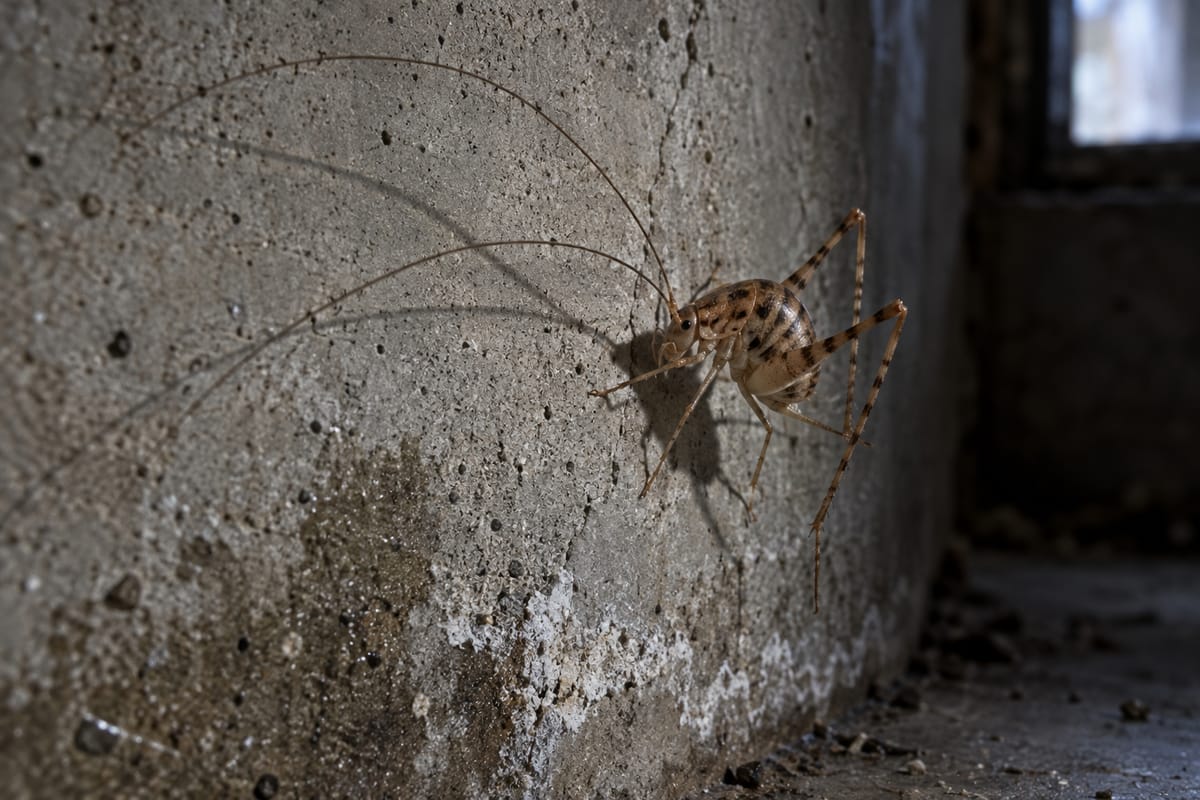
That is a camel cricket. A lot of people around here call them spider crickets, or sprickets. Once autumn arrives they are one of the most common calls we get. The good news is that they are mostly harmless. The real problem is usually moisture — and that is something you can fix.
How to spot one
Camel crickets are tan to dark brown with a humped back, a bit like a camel. They run from about half an inch to an inch and a half long. Two things give them away: the antennae are very long, often longer than the body, and the back legs are thick, like drumsticks.
They have no wings, which means camel crickets do not chirp. If you hear chirping in the house, that is a different insect.
Plenty of people take them for spiders at first, and in a dark basement that is an easy mistake. Count the legs — camel crickets have six, spiders have eight. Spiders also have no antennae, and they do not jump across the room at you.
Most of them came from overseas
Here is something most people do not know: the camel cricket in your basement is probably not native.
A few years ago researchers asked people across the country to send in photographs of the camel crickets in their homes. Most turned out to be a species from East Asia rather than the native one. It first arrived in the United States more than a century ago, in a greenhouse, and it is now the one you are most likely to find indoors.
The same researchers set traps in people’s yards, and caught the most crickets right up against the house. That is the useful part. Your camel crickets mostly live outside, next to the foundation, and wander in from there. The fix starts outside, not in the basement.
If you want to check yours, the Asian species has long thin legs with light and dark banding. Striped legs are the easy tell.
Do camel crickets bite?
No. This is the first question we are asked every time, so to be clear: they do not bite people, they do not sting, and they are not venomous.
Can they damage anything? Occasionally. In a damp basement with a lot of them, they will chew on clothing or paper stored in cardboard. That is one more argument for getting rid of the cardboard.
And the jumping does feel personal. It is not. Jumping is how they escape, and a wingless insect jumping blindly in a small room is going to go the wrong way a lot of the time. Alarming, yes. Aimed at you, no.
One odd fact: if something grabs a camel cricket it can shed a leg to get away. So if you find one with five legs, or a loose leg on the floor, that is why.
Why this area gets so many
Camel crickets want damp, and around here a lot of basements oblige.
Homes near water. If you are near the Little Miami in Loveland or Milford, you know the river rises from time to time. Your basement does not have to flood for this to matter: the Milford gauge has topped minor flood stage dozens of times on record, and saturated ground against a foundation keeps the space humid for weeks after the water has gone down. That is exactly the condition camel crickets are looking for.
Homes near woodland. Wooded edges mean shade, leaf litter and damp soil right against the house — the pattern the Indian Hill area is known for, and true of parts of Milford and Loveland as well. You start with more crickets waiting at the wall than a house on an open lot would.
Older homes. A good deal of housing in Madeira and Mariemont predates 1950, and older basements often have block or stone walls with more cracks and gaps to get through. Newer construction in Amelia and Withamsville generally offers fewer ways in — although it can still get them, especially where the soil has settled and now slopes back toward the house.
And Cincinnati summers are humid. All that moisture in the air has to go somewhere, and in most houses it ends up in the basement.
How to get rid of them
In order of how much difference it makes.
Dry the basement out. This is the big one. A dehumidifier changes everything. Aim to keep relative humidity under 50%, and buy a cheap humidity gauge so you know where you actually stand.
Fix what is causing the damp. Make sure the ground slopes away from the house. Fit downspout extensions so rainwater drains away from the foundation. Pull mulch back about a foot from the wall. In older houses, soil that has settled toward the foundation over decades is a common culprit.
Get rid of the cardboard. It gives them somewhere to hide and something to eat. Switch to lidded plastic bins, keep them on shelves, off the floor and away from the walls. It is the cheapest pest prevention in the house.
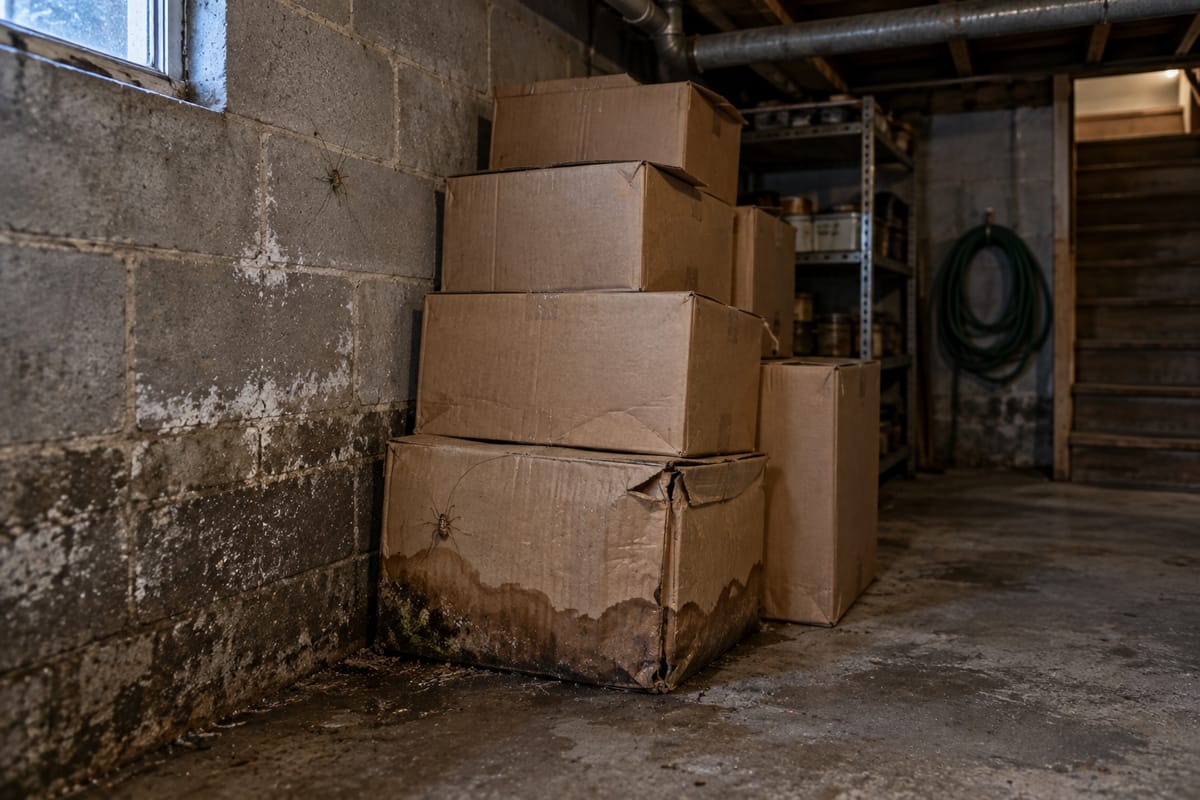
Put down sticky traps. Camel crickets are caught easily. Run them along the walls and near doors. They will take some crickets out and, more usefully, show you whether things are improving.
Seal the gaps. Weatherstrip the basement door, screen the vents, caulk cracks in the foundation. The same work keeps out the rest of the autumn arrivals. Try to get it done before the first freeze — and note that the Milford weather station normally records its first freezing night about a week ahead of the Cincinnati airports, so the river-valley deadline is earlier than the regional forecast suggests.
Spray last, if at all. Spraying kills the crickets you can see today. It does nothing about the damp that will produce the next lot.
Most of this you can do yourself. For the bigger jobs — drainage, a sump pump, sealing an old stone foundation, or any pesticide use in a closed basement — get someone in.
Common questions
Are they dangerous to my kids or pets?
No. No bite, no sting, no venom. If the dog eats one, the dog will be fine.
Will they spread through the rest of the house?
Usually not. They want dark and damp, so they stay in basements, crawl spaces and garages. If you are seeing them upstairs, either there are a great many of them or there is a moisture problem worth investigating.
I’m not near the river. Why do I have them?
The river is only one way to get a damp basement. A downspout emptying next to the foundation, soil sloping toward the house, or a crawl space with no airflow will do it on any street.
Do they breed in my basement?
Mostly they come in from outside. They lay eggs in soil in spring, so the ones in your basement almost certainly came from the strip of ground right against your foundation.
Why are there so many this year?
Look at the weather. A very wet stretch and a long dry spell can both push them indoors — which is why you tend to see more of them in September and October either way.
Should I bother if they’re harmless?
That is up to you. A few crickets are a nuisance and nothing more. The reason to act is what they are telling you: standing water and a chronically damp basement lead to problems considerably more expensive than crickets.
We’ll look at the whole picture
Camel crickets in the basement are a moisture signal. That is worth knowing about even if the crickets themselves do not bother you.
We cover Loveland, Milford, Madeira, Indian Hill, Mariemont, Batavia, Amelia and Withamsville, plus Cincinnati and Northern Kentucky.